What is Kaizen?
Kaizen is a Japanese term that means "improvement". The word 'kai' means 'change' and 'zen' translates to 'good'. It is a system that targets continuous improvement in human resources and processes, thus effectively anchoring an industry for long-term and fruitful operation. It was first applied in Japanese businesses to cope with the effects of World War II. It showed significant results and was popularly applied even in other countries.
Efficiency is just one goal of the system. Aside from raising productivity, it aims to provide a healthy working environment for employees of all levels. This in turn creates an organized and creative force that enriches the company, the employees, and most importantly, the services rendered to the consumers. It is a cycle that requires cooperation and knowledge in all departments. If possible, the system is extended to outer participants, such as the suppliers.
Free Guide to Kaizen More Information on Kaizen |
The Toyota Production System is known to contain all the principles applied by Toyota through the years. It is a prominent example of an improvement system that has been acknowledged in worldwide productions. Their production lines are halted when an abnormality arises, small as this may seem, followed by a swift application of improvement methods. This is also known as PDCA, Shewhart, or Deming cycle.
Dr. W. Edwards Deming, an American statistician, popularized the Plan-Do-Check-Act method based on his collaborations with, and studies of, American physicist Walter Shewhart's work. It centered on quality control in all aspects of production in order to deliver a high quality, and eventually cheaper, output. The concept of the PDCA is patterned from Francis Bacon's scientific method. It was used and adjusted according to the needs of the Japanese industries, with perfection as the ultimate—but not last—goal in mind.
The first step in the PDCA method effectively identifies the problem, allowing the team to formulate a plan to achieve desired results. This is an initial plan that contains the expected highest quality outcome.
Next step is the execution of the plan, together with the accumulation of data for later comparisons. This is where charts and diagrams play an important role in securing basis for improvements.
Upon the achievement of results, it is then checked and compared to the expected output. The differences would then be discussed to come out with the latest refined plan. The application of this new plan is the last of the cycle wherein the processes are again subjected to tests and accumulation of data. This cycle may be likened to trials and errors, but if the process is recurring and the data measurable, every cycle leads to improvement.
PDCA is a repetitive method that guarantees increase in knowledge to improve production processes. It is like polishing a stone to be turned into a jewel, but does not stop in that achievement alone. It is a method that can be applied as many times as possible to attain the most perfect and appropriate state, not just in business, but even in the personal and social level.
Kaizen contains elements that are strictly applied for the system to be effective. These are teamwork, personal discipline, improved morale, quality circles, and suggestions.
Teamwork is an important aspect of a person's life. Whether at work or at home, people have the common goal of developing lives. Even on a personal level, people still need others to offer support. Greater developments require people who will provide ideas to suit the common goal and aid in its implementation. This is practically true in successful industries and endeavors.
Teamwork requires appreciation and respect for each member. It is a matter of identifying the problem rather than who brought the problem. It promotes creative criticism and encouragement. A working environment that focuses on achieving ranks or status will possibly experience decline in overall productivity. By observation, teamwork is one of the notable differences between Japanese and Western industries.
Free Guide to Kaizen More Information on Kaizen |
Personal discipline, or self-discipline, is an aspect taught and learned as early as childhood. Most of it is ingrained while growing up and adjusted upon a person's understanding of society's expectations. It is important in working with a team of different personalities (or culture, for international employments) to make the person used to treating any aggressive comments as 'business as usual' rather than a personal attack. It assures harmony and produces efficient results for the benefit of everyone.
If people act and work with the goodness and safety of everyone in mind, it brings an improved morale in a working environment. Work can be stressful, especially during economic crisis or a disaster, that's why a pleasant environment, particularly with friendly and trustworthy co-workers, is an advantage.
The other two elements—quality circles and suggestions—are some of the main forces behind Toyota's staying power in its industry. Toyota faced a lot of financial crisis, but its principles remained as its strong anchor.
Quality control circles are teams that focus on identifying, analyzing, and proposing solutions to work problems. It is composed of workers, or students, together with a supervisor or team leader. It is a concept that encourages development and expression of individual ideas rather than delegation of individual jobs. This avoids pointing fingers on the person who made the mistake and instead focusing on resolving the resulting problems.
Japanese businesses usually consider a production line as an already established quality circle. The swift identification of a problem in the first phase of production can reduce problems on a major scale. Education is an important tool in ensuring this method. Each worker is provided actual training in devising solutions to abnormalities arising in their workstation. If every workstation executes the same quality control, the combined impact in reduced expenses and time would be stunning.
Suggestions had been significant in acquiring improvement ideas from the workers themselves. Suggestion boxes are put in departments to know what the employees think of management rules and its effects on them. Sadly, the suggestions are most of the time too many to consider and are based on irrational thoughts or selfish complaints. But in "lean manufacturing", suggestions are given a different approach.
Suggesting is defined as an act of trying to seek influence on a particular subject. It can either be approved or rejected. This process of sorting out the useful options from the pile of personal grudges takes valuable time and resources from the company. Even setting up a separate committee will prove pointless and biased in the long run. But for practitioners of improvement methods, particularly Toyota, no suggestion is trash.
According to Jon Miller, author of The Suggestion System is No Suggestion, Toyota considered their suggestion system as an accumulation of creative ideas. No suggestion is rejected and everything is duly credited to the person who thought of it. How could this happen when there are more than half a million suggestions accepted every year from its employees?
First, take note that there is no separate team or department that reviews these suggestions. Analyzing and refining the suggestions happen on the majority of the lower levels. The employee is encouraged to offer a suggestion and it is quickly discussed and improved together with the supervisor. Implementation of the idea is a given since the employee is sure to apply it in their own workstations. There is no threat of complaints since the solution is simply and immediately executed.
Another characteristic of a Japanese suggestion system is the payment for ideas. Some may call this "blackmail", but it is a way for a company to let its employees know that their ideas are appreciated. The payment doesn't necessarily have to be in cash, especially if the company involved is just starting out. Small gifts that are valuable in everyday life—gift baskets, hygiene sets, a bottle of wine or a box of chocolates—are appropriate alternatives.
For multinational industries like Toyota, as written by Jon Miller, they mostly reward ideas with cash ranging from five to two thousand dollars. The amount depends on the costs saved by the company due to that particular idea. In addition to the rewards, this method provides training for employees that are more valuable than lectures. That alone saves Toyota's training cost and time while effectively multiplying its workers' skills.
Some people question this reward system and label it as unnecessary, but there are really no rules followed or laws broken with its implementation. According to Jon Miller's data, the system actually provides "compensation" for the workers' time in creating and refining the ideas. These thoughts might have appeared while on breaks or outside of work. These ideas are obviously given further refining by the conceiver with the belief in its usefulness. Toyota benefits from these ideas in an economic scale and so they show their appreciation by giving something back to their work force.
The factor in this PDCA system that is probably the most important is the hiring of inspiring, dedicated, and effective supervisors or leaders. These positions are essential in encouraging each employee, from the maintenance people to the CEO, to participate and work in the company as a single unit. Therefore, the supervisors may have come from the lower ranks and eventually promoted in their jobs. They are trained by experience to work with their workers, acting as coaches, and guiding them in producing and refining their ideas.
Each employee in this improvement system is required to have one idea per month. There is no reason for an employee to have none because the supervisor's job is to make sure that they are encouraged and provided help to be able to form this idea. It is teamwork from every level and the only way to go is up. It is a system that has been proven effective in Toyota for more than five decades.
Now that the elements of the improvement system in Japanese businesses are defined, the suggestions are then implemented. Take note that the suggestions vary, from the simplest to the more complex applications. Considering this, once the idea is conceived, it is almost immediately implemented by the conceiver. The supervisor would be the one to coordinate any resources required for much more detailed suggestions, but it's already a done deal. It has made that worker's job more efficient than before.
Aside from the PDCA, there are other methods that are practiced by Toyota and other successful industries. These are the Just-in-time (JIT) strategy, the Six Sigma strategy, and the 5S.
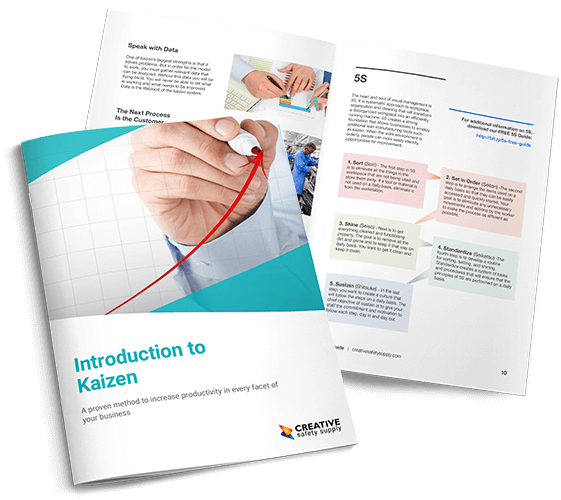
People working with Japanese companies are familiar with the 5S method. They are translated in English, namely Seiri (Sorting), Seiton (Stabilize), Seiso (Systematic Cleaning), Seiketsu (Standardizing), and Shitsuke (Self-discipline). In a working environment this a system which means: 1) Taking out only the tools and materials needed, 2) Items should each have designated places to promote systematic and efficient work flow, 3) Cleaning is a daily activity, executed immediately after the work is done, 4) Providing a standard work station in which anyone can be assigned without additional instructions, and 5) Maintaining the first 4S at all times and incorporating it even in people's daily lives.
The Six Sigma is known to be implemented by Motorola, USA. It follows the DMAIC and DMADV methods patterned on Deming's PDCA. DMAIC means "Define, Measure, Analyze, Improve, and Control". DMADV stands for "Define, Measure, Analyze, Design, and Verify". Both methods focus on the improvement of quality in production.
One of the basic considerations of a business is the storage of its materials and supplies. Inventory is an important activity in business, but JIT decreases it, particularly in Toyota's case.
In JIT, materials and tools arrive at the exact time they are needed, eliminating unnecessary stocks. The workers are trained to use the exact materials that are available, reducing any possible wasted and discarded parts. The workers would also be keener in maintaining the standard as much as possible.
Kaizen is a lifestyle on its own and the benefits of its methods cover the interests of both company and consumer. Improving life is the goal that everyone will definitely agree with.
Free Guide to Kaizen More Information on Kaizen |
5S - Process or a large part of Kaizen
Lean Manufacturing - Helps develope lean process
Poke-Yoka - Process to help find average timing
If you have any questions regarding floor marking regulations or products, please give us a call or send us an email - we'd be glad to assist you! We can be reached M-F, toll-free at (866) 777-1360, or via email: [email protected]