

Every workplace comes with its share of hazards, but arguably electricity is among the most dangerous. Unlike visible hazards, electrical risks cannot be seen or heard, making them especially perilous without proper warning systems in place. This is where electrical safety signs and symbols become essential; they serve as a clear and immediate way to communicate hidden electrical risks, helping prevent accidents before they occur.
From high-voltage areas to sensitive equipment zones, these signs play a critical role in guiding safe behavior and ensuring compliance with safety standards. In this guide, we will explore the purpose of electrical safety signs, the meaning behind their symbols and colors, regulatory requirements, and the different types used across various hazards and applications.
Purpose of Electrical Safety Signs
Electrical safety signs are essential communication tools in environments where electrical hazards are present. They serve the following functions:
- Accident and Injury Prevention: Electrical safety signs help reduce the risk of electric shock, burns, and other injuries by warning individuals before they come into contact with hazardous electrical systems.
- Legal and Regulatory Compliance: Electrical hazard signs support compliance with safety standards and regulations set by authorities such as OSHA, ensuring workplaces meet required safety obligations.
- Operational and Emergency Efficiency: Electrical safety signs improve response time and decision-making by helping workers quickly identify hazards and follow correct procedures during maintenance or emergency situations.
These functions highlight why electrical safety signs are a fundamental part of any safe working environment. To understand how these signs convey meaning so effectively, it is important to look at the standardized symbols and color codes used in their design.
Symbols, Colors, and Other Elements of Electrical Safety Signs
Electrical safety signs are built using a standardized combination of visual and textual elements that work together to communicate hazards quickly and effectively. Each component plays a specific role in ensuring that electrical risks are immediately understood, even in fast-paced or high-risk environments.
Signal Word and Colors of Electrical Signs
The signal word is usually placed at the top of the electrical safety sign and is always paired with a specific safety color to indicate the level of danger:
- RED with “DANGER”: Imminent electrical hazard can result in death/serious injury if not avoided.
- ORANGE with “WARNING”: Serious electrical hazard that could result in death or severe injury.
- YELLOW with “CAUTION”: Moderate hazard that may lead to minor or non-life-threatening injury.
- BLUE with “NOTICE”: Non-hazard information used for instructions or workplace rules.
Together, the color and signal word allow for instant recognition of risk severity without needing to read detailed text.
Electrical Safety Symbols or Pictograms
Safety symbols identify the type of electrical hazard and are designed for immediate recognition.
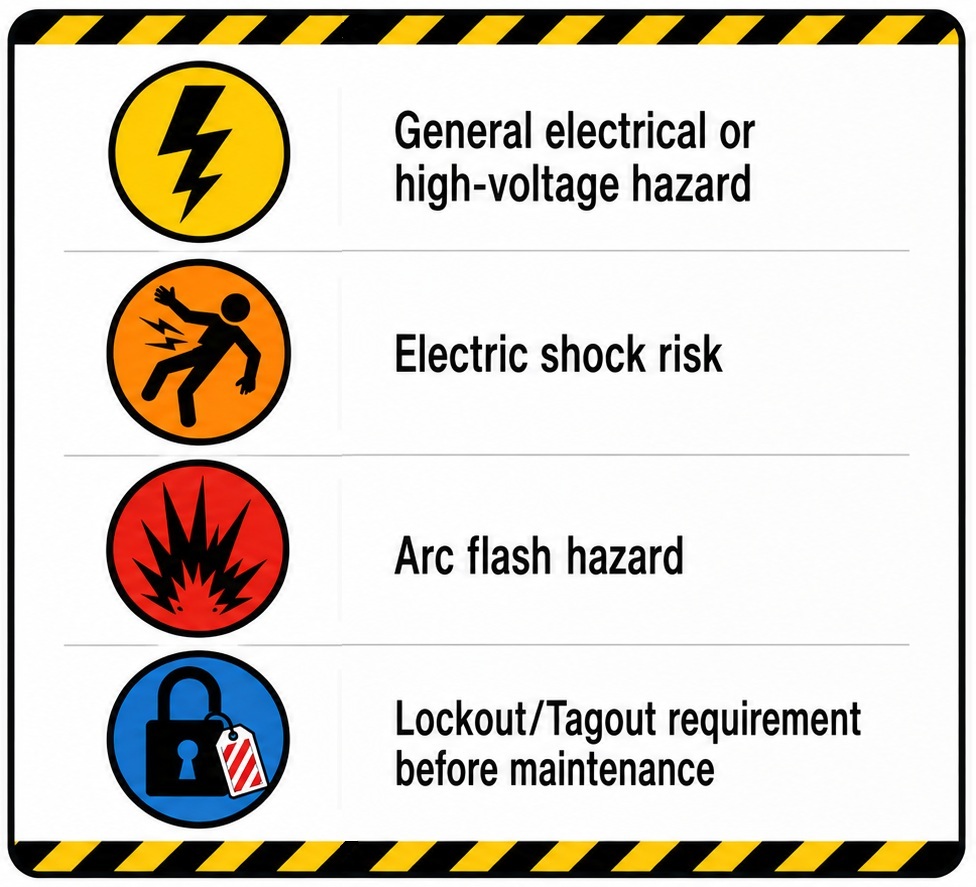
The text and colour of the electrical signs may vary, but the pictograms are universal, ensuring consistent meaning across languages and locations.
Text or Core Message
The text section provides clear, concise information that supports the visual elements of the electrical safety sign. It is typically structured to answer three key questions:
- What is the electrical hazard?
- What is the risk?
- What should be done?
This ensures that individuals not only recognize the hazard but also understand the required safety action.
Some electrical safety signs include supplementary details that support compliance and operational clarity. These may include voltage ratings, equipment identifiers, circuit references, or maintenance instructions used for inspection and safety management. These components form a structured communication system that ensures electrical hazards are clearly visible, instantly understood, and properly acted upon.
Regulatory Compliance for Electrical Safety Signs
Regulatory bodies like OSHA set guidelines to ensure that hazards are properly identified and communicated in the workplace, making electrical safety signs a mandatory requirement in many environments. For instance, under 29 CFR 1910.335(b), OSHA mandates that employees working in areas with potential electrical hazards must be provided with, and trained to understand, appropriate safety signs, tags, and labels.
Similarly, under 29 CFR 1910.145, OSHA outlines the specifications for these warning signs, including standardized requirements for signal words, colors, and formatting. This ensures consistent communication of hazard levels such as danger, warning, and caution across all workplaces, improving clarity and reducing the risk of electrical accidents. These OSHA regulations make electrical safety signs a required part of workplace hazard communication, helping reduce risk and ensure consistent safety practices.
Electrical Safety Signs for Different Hazards and Applications
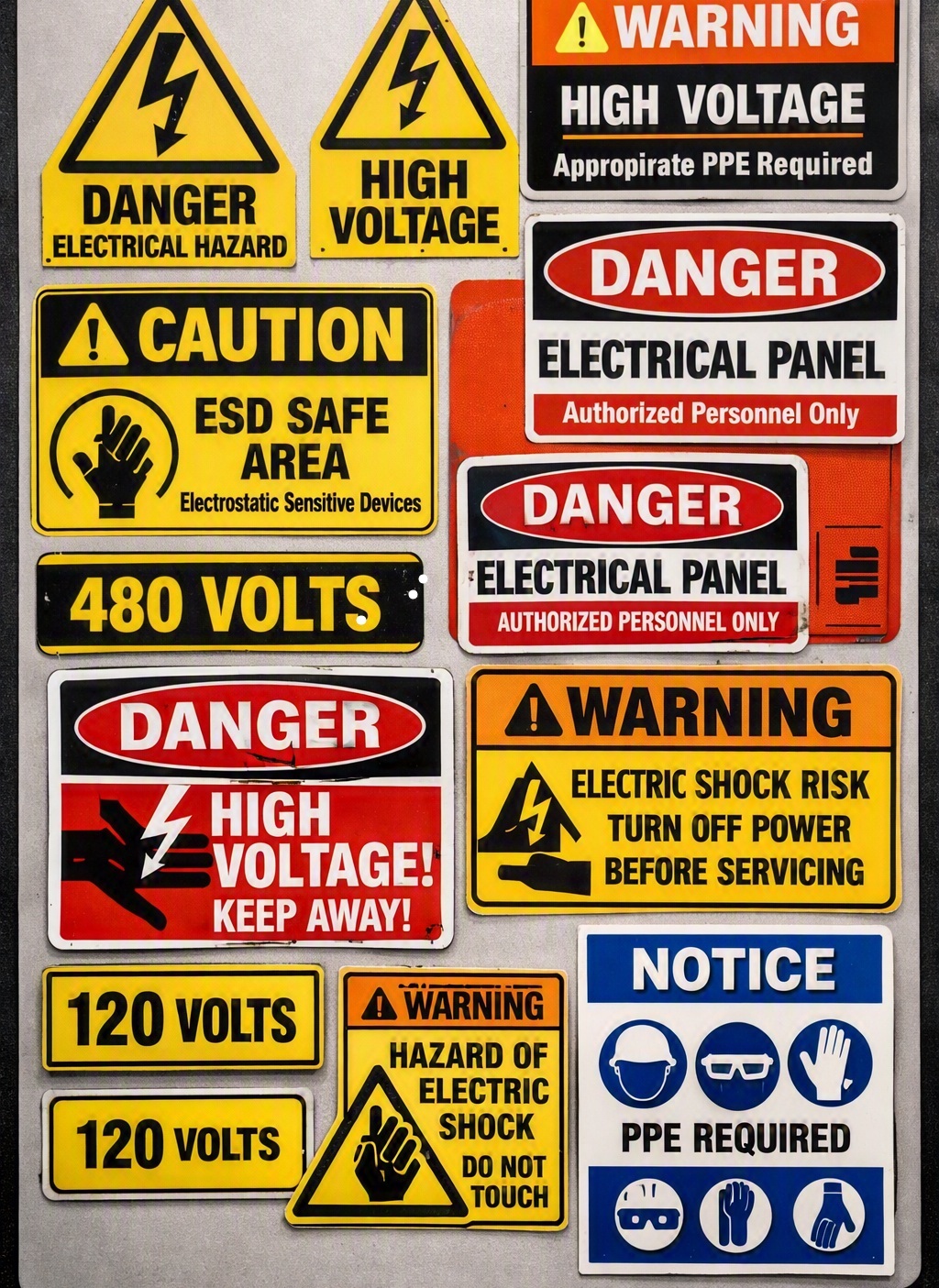 Electrical safety signs are designed to address specific risks depending on the environment, equipment, and task involved. Each type of sign communicates a distinct electrical hazard or safety information, enabling workers to respond appropriately in different situations. To better understand how these signs are used in practice, let’s look at some common examples of electrical safety signs:
- Arc Flash Signs: Used in areas where there is a risk of sudden electrical explosion accompanied by extreme heat and pressure. These electrical safety signs are critical for protecting workers during maintenance and switching operations.
- ESD (Electrostatic Discharge) Signs: Found in environments with sensitive electronic components, these signs remind personnel to take precautions against static electricity that could damage equipment.
- Electrical Hazard Signs: General warning signs used to indicate the presence of electrical risks such as exposed wiring or energized equipment.
- High Voltage Signs: Clearly mark areas or equipment carrying dangerous levels of electrical energy that can cause severe injury or death on contact.
- Electrical Panel Signs: Identify electrical distribution or control panels and often restrict access to qualified personnel only.
- Electrical Room Signs: Indicate rooms containing electrical systems and infrastructure, helping control access to authorized individuals.
- Circuit Breaker Signs: Label circuit control systems to assist with safe maintenance, troubleshooting, and emergency shutdown procedures.
- Voltage Markers: Provide specific information about voltage levels within a system, helping technicians assess risk before interaction.
- Lockout/Tagout Signs: Indicate that equipment has been isolated and must not be operated, ensuring safety during maintenance or repair work.
By using the correct electrical safety sign for each hazard type, workplaces ensure that risks are communicated in context, reducing confusion and improving overall safety awareness.
Use Compliant Electrical Safety Labels in Your Facility
Using compliant electrical safety labels is essential for maintaining a safe and legally aligned workplace. Proper safety signage ensures that electrical hazards are clearly identified, helping prevent accidents and supporting safe day-to-day operations. Investing in the right electrical safety signs is a practical step toward strengthening workplace safety, ensuring compliance, and protecting both people and equipment.
Similar Articles
- Understanding, Conducting, and Prioritizing Electrical Safety Training
- Understanding ISO Standards for Safety Signs and Symbols
- Understanding Hazardous Materials Safety Signs
- Warning Signs: Meaning, Colors, Shapes, Types & Uses
- Guide to Equipment Safety Signs: Machinery & Industrial Tools
- What are Approach Boundaries in Electrical Safety?
- Essential Electrical Safety PPE: Ensuring Worker Protection from Electrical Hazards
- A Guide to Workplace Safety Signs
- A Guide to Fire Safety Signs in the Workplace
- Medical Safety Signs in Healthcare


