
Hazardous materials may often not appear dangerous at first glance to those without specialized knowledge, but the right safety sign can make the risk instantly clear. From a small chemical label on a bottle to large placards on transport vehicles, hazardous materials safety signs are designed to communicate critical information at a glance. They help workers, emergency responders, and the public recognize dangers, take precautions, and respond correctly in high-risk situations.
Before diving into the types of hazardous materials safety signs, it’s important to understand what makes a material hazardous.
What Makes a Material Hazardous?
What makes a material hazardous is its intrinsic capability to cause harm to health, safety, property, or the environment. However, because a single material can present different risks in different scenarios, regulatory agencies use unique definitions to determine when a material officially becomes hazardous.
- Transportation Focus (DOT/PHMSA): For transportation, the U.S. Department of Transportation and the Pipeline and Hazardous Materials Safety Administration classify materials based on risks during transit. These include hazards like flammability, explosiveness, toxicity, and reactivity, grouped into standardized hazard classes used on shipping labels and placards.
- Workplace Safety Focus (OSHA): In workplaces, OSHA uses the Globally Harmonized System of Classification and Labelling of Chemicals to classify chemicals. This system focuses on physical hazards, like fire risk, health hazards, such as toxicity or carcinogenicity, and environmental hazards, ensuring consistent labeling and communication.
- Waste Management Focus (EPA): The Environmental Protection Agency defines hazardous waste based on characteristics such as ignitability, corrosivity, reactivity, and toxicity. This classification is crucial for safe disposal of these materials and environmental protection.
- Emergency Response (NFPA): The NFPA classifies materials based on the acute, short-term danger they pose to first responders during a fire, spill, or leak. Their NFPA 704 system uses the "Fire Diamond" to quickly communicate high-level risks so responders can decide on protective gear and evacuation zones instantly.
It is essential to verify whether a material is regulated by DOT, OSHA, or specific fire codes to ensure safe handling and compliance. Understanding the relevant system for a given context simplifies the interpretation of the hazardous materials safety signs encountered.
Different Types of Hazardous Materials Safety Signs
Hazardous materials safety signs are categorized into four primary systems based on their application environment: workplace labeling, fixed facility identification, transportation placarding, and hazardous waste labeling. Each system uses standardized shapes, colors, and symbols to communicate specific types of risk quickly and consistently.
Workplace Signs (GHS/OSHA)
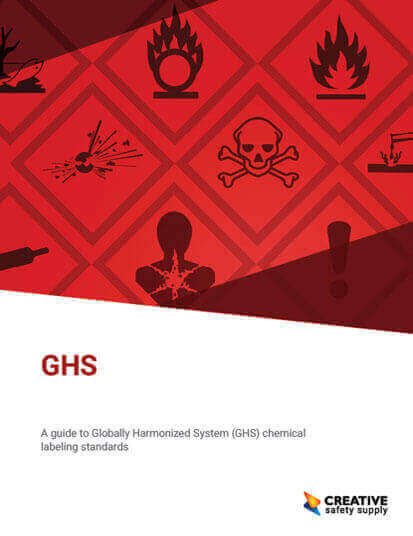
Workplace signs for hazardous materials are based on GHS and implemented in the U.S. through OSHA’s Hazard Communication Standard. These Hazmat signs use square-on-point pictograms with a bold red border and appear on chemical containers and Safety Data Sheets (SDS).
GHS signs are designed to travel with the product, ensuring hazards remain clearly communicated wherever the chemical is handled or stored.
Fixed Facility Identification (NFPA 704)
The NFPA 704 system is used for buildings, storage areas, and fixed installations to provide rapid hazard recognition for emergency responders. It features a four-colored diamond. Each category is rated from 0 (minimal hazard) to 4 (severe hazard), allowing responders to quickly assess the level of danger during fires, spills, or other emergencies.
Unlike GHS signs, NFPA 704 does not identify specific chemicals; it provides a rapid severity snapshot to guide emergency actions.
Transportation Placards (DOT)
These large diamond-shaped signs are required on trucks and railcars and are color-coded by the 9 Hazard Classes defined by international transport regulations. Transport placards are designed for rapid identification during transit, particularly in accidents or spills, enabling emergency responders to determine appropriate handling and response measures.
Hazardous Waste Signs (EPA)
Hazardous waste signs are used on containers holding discarded materials that are classified as hazardous waste. These signs ensure safe accumulation, storage, and disposal in compliance with environmental regulations. They typically state “Hazardous Waste,” include hazard indicators consistent with chemical classification systems, and contain administrative details such as accumulation start dates. Their primary purpose is to prevent improper handling and ensure traceability from generation to final disposal.
Although these hazardous materials safety sign types differ in design and purpose, they are complementary. Together, they form a comprehensive hazard communication framework that ensures materials are clearly identified across their entire lifecycle, from manufacturing and storage to transportation, emergency response, and final disposal.
Common Examples of Hazardous Materials Signs
Hazardous materials safety signs are used across workplaces, storage areas, and other settings to communicate specific risks associated with chemicals and dangerous substances. Here are some examples of these signs.
- Explosion Signs: Indicate materials or environments with explosive risk.
- Toxic Chemical Signs: Used for substances that can cause serious harm or death through inhalation, ingestion, or skin contact.
- Agrochemical Signs: Applied to pesticides, fertilizers, and agricultural chemicals that pose health or environmental risks.
- Ammonia Signs: Specifically used for ammonia storage and handling areas due to its toxicity and corrosive nature.
- Chemical Safety Signs: General warning signs for chemical handling zones, storage rooms, and laboratories.
- Flammable Chemical Signs: Indicate materials that can ignite easily under normal conditions.
- Radiation Signs/Radioactive Signs: Used interchangeably to mark ionizing radiation hazards in medical, industrial, or nuclear environments.
These hazmat signs provide clear, hazard-specific warnings that ensure risks are immediately recognizable and safety procedures are consistently followed in real-world settings.
Ensure Safety with Compliant Hazardous Materials Signs
Hazardous materials safety signs are essential for clearly communicating risks across workplaces, facilities, transport systems, and waste management operations, ensuring compliance with key standards. Because effective hazard communication relies on clarity, durability, and instant recognition, investing in high-quality, standards-compliant signage is critical for both safety and operational performance.
At Creative Safety Supply, we deliver durable, compliant hazardous materials safety signs designed for maximum visibility and long-term reliability, helping organizations protect people, safeguard assets, and maintain full compliance with confidence.
Similar Articles
- Handling Hazardous Materials Safely
- Hazardous Materials Identification System (HMIS Labels)
- Understanding Electrical Safety Signs
- Title 49: Shipping Hazardous Materials
- Understanding ISO Standards for Safety Signs and Symbols
- Medical Safety Signs in Healthcare
- A Guide to Workplace Safety Signs
- HAZWOPER [OSHA Hazardous Waste Standard]
- Understanding the NFPA 704 Diamond Labeling System
- Mining Safety Signs: What You Need To Know