In any facility, a network of essential process and utility pipelines keeps operations running smoothly, but without clear labeling, they can pose serious safety risks and create operational inefficiencies. How can facilities make these lines easy to identify and ensure employees stay safe while maintaining compliance? Let’s explore how a strategic pipe marking system can improve workplace safety and efficiency.
Pipe Marking Implementation Steps
Follow these steps to implement an effective and compliant pipe labeling system in your facility.
System Assessment and Planning
Your first task is to know everything running through your facility’s pipelines, what's inside them, which way it flows, how hot or pressurized it is, and if it's hazardous. Here is how to go about it:
Conduct a Facility Audit: Begin with a facility audit to identify all pipes, noting their contents, flow direction, pressure, temperature, and potential hazards.
Gather Pipe Data: Record diameters (including insulation) and potential label locations.
Select a Relevant Standard: Choose an industry guideline, such as ANSI/ASME A13.1 or another standard as required to ensure consistency.
Develop a Labeling Plan: Determine label placement, content, and color coding.
Label Design and Material Selection
Make sure your pipe labels are easy to understand and built to last. Here is how you can ensure that:
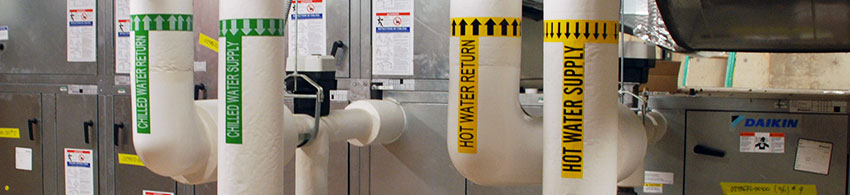
Design Labels: Whether you create labels in-house or order from a supplier, pipe markers must have clear text, standardized colors, and intuitive directional arrows. Use software templates aligned with your chosen standards to keep sizing and formatting correct.
Select Materials: Choose durable materials suitable for your environment, such as moisture, heat, and cold-tolerant labels, to ensure long-lasting performance, whether printed in-house or purchased externally.
Strategic Labels Installation
Once you have created or sourced your pipe markings, it’s important to install them correctly:
Prepare Surfaces: Clean pipes thoroughly to remove dirt, oil, or contaminants for proper label adhesion.
Place Labels Strategically: Ensure pipe labels are placed at regular intervals on straight runs, and at all critical points. Ensure maximum visibility by placing labels at a height and angle that are easily seen from the typical line of sight.
Apply Labels Carefully: Smooth from the center outward to avoid bubbles and ensure a secure bond.
Training and Maintenance
Without training and regular maintenance, even a perfectly installed labeling system would quickly become obsolete and ineffective. Consider the following steps to ensure the ongoing functionality of your labeling program:
Create a Pipe Marking Key or Chart: Explain all symbols, abbreviations, and color codes. Display it in high-traffic areas.
Train Personnel: Educate employees, contractors, and emergency staff on label interpretation and associated hazards.
Routine Inspection: Check for faded, damaged, or missing labels and replace them immediately.
Document the System: Maintain records for pipe marking audits and future reference.
Standardization is key to implementing an effective pipe labeling system in your facility. Following best practices from industry leaders, such as ANSI/ASME, ensures clear, consistent pipe identification, helping all employees interpret labels correctly. Strategic label design and installation, training, and a pipe marking key can help keep your facility compliant, safe, and efficient.
Similar How-To's
- How to use Pipe Markings with the Proper Color Codes
- How to Use Floor Markings
- How to Use GHS Labels
- How to avoid Common Equipment Labeling mistakes
- How to Avoid Physical Hazards
- How to Use a LabelTac Industrial Label Printer
- How to Implement Continuous Improvement
- How to Implement Kanban
- How to Effectively Label Equipment