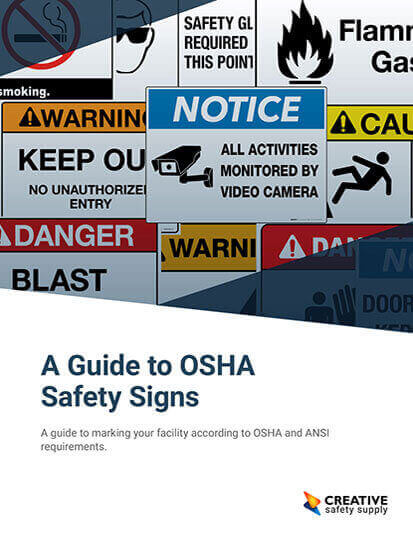

Danger signs are standardized visual alerts used for immediate, life-threatening hazards. These safety signs are designed for instant recognition in high-risk areas such as electrical installations, chemical storage zones, construction sites, and confined spaces. Their purpose is simple: stop unsafe entry or unsafe actions before harm occurs.
Unlike general safety notices, danger signs communicate urgency and severity at a glance through standardized colors, symbols, and layouts defined by OSHA and ANSI. In practical terms, a danger sign means: Access or action in this area can cause serious harm; proceed only if you are fully authorized and protected.
Let’s take a closer look at the key characteristics of danger signs, the hazards they represent, and their real-world applications in industrial and workplace settings.
Key Characteristics of Danger Signs
Danger signs follow strict design standards to ensure they are immediately recognizable without any training, even in high-pressure or low-visibility environments. These standardized elements are defined by safety regulations such as OSHA and ANSI to maintain consistency across industries.
- Standardized Color System: Danger signs use a high-contrast color combination, typically red, black, and white. The red color signals extreme risk and immediately captures attention, even from a distance.
- Signal Word “DANGER”: The word “DANGER” is displayed in white capital letters inside a red oval with a black background. This format is reserved exclusively for the most severe hazard level.
- Clear Layout Structure: Most danger signs follow a clear two-part layout to ensure quick and easy understanding in high-risk situations.
- The top section displays the signal word “DANGER,” which immediately communicates the severity of the hazard.
- The bottom section provides specific information about the hazard or instructions on how to avoid it.
- This structured separation helps users quickly recognize both the level of risk and the nature of the danger without confusion.
- Universal Safety Symbols: Pictograms are often included to visually represent hazards such as electricity, chemicals, radiation, or machinery. These symbols help overcome language barriers and improve instant recognition.
- Strategic Placement: Danger signs are placed directly at or near the hazard source to ensure immediate visibility before a person enters the danger zone.
Types of Hazards Indicated by Danger Signs
Danger signs are used across industries to identify situations where exposure can result in serious injury or death. Each hazard type represents a specific risk category that requires strict control and awareness.
- Electrical Hazards: These signs indicate the presence of high-voltage or energized equipment. They are commonly placed near electrical panels, substations, and industrial machinery where accidental contact can result in electric shock or arc flash injuries.
- Chemical Hazards: Used in areas where toxic, corrosive, or reactive substances are present. These signs warn of risks such as poisoning, burns, or explosive reactions if materials are not handled correctly.
- Radiation Hazards: Found in medical facilities, laboratories, and industrial testing zones. They indicate exposure to ionizing radiation, which is invisible but can cause serious long-term health effects.
- Confined Space Hazards: Used in tanks, silos, tunnels, and other enclosed environments with limited airflow. These areas may contain low oxygen levels or toxic gases, making entry extremely dangerous without proper precautions.
- Mechanical and Machinery Hazards: Placed near heavy or automated equipment with moving parts. They warn of risks such as crushing, entanglement, or impact injuries during operation or maintenance.
Industries Where Danger Signs Are Used
Danger signs are widely used across facilities where workers are exposed to high-risk conditions and life-threatening hazards. These signs play an essential role in ensuring safety compliance and preventing accidents in environments where even a small mistake can have serious consequences.
- Industrial Facilities and Factories: Used near heavy machinery, production lines, and automated systems to prevent accidental contact and operational injuries.
- Construction Sites: Placed around high-risk zones, such as open excavations, falling-object areas, and high-voltage equipment, to protect workers and visitors.
- Laboratories and Chemical Storage Areas: Indicate restricted zones containing hazardous substances where only trained personnel are allowed.
- Electrical and Utility Environments: Installed near substations, transformers, and control panels where exposure to live electricity poses a severe risk.
- Confined or Restricted Spaces: Used in tanks, tunnels, and underground structures to warn of oxygen deficiency, toxic gases, or entry hazards requiring specialized safety procedures.
The danger signs, like other safety signs, act as the final barrier of communication when physical guards or engineering solutions are not enough to eliminate the risk in these facilities.
Choosing the Right Danger Signs for Safety and Compliance
Danger signs are essential safety tools to communicate the highest level of workplace hazard. By clearly identifying life-threatening risks, they help prevent serious injuries and ensure compliance with safety standards like OSHA and ANSI. Their standardized design and clear messaging make them instantly recognizable across industries, supporting safer decision-making in critical environments.
For facilities looking to improve workplace safety and compliance, selecting high-quality, OSHA-compliant danger signs is crucial. Durable and clearly visible safety signage not only helps reduce risk but also ensures long-term reliability in demanding industrial conditions.
Similar Articles
- Warning Signs: Meaning, Colors, Shapes, Types & Uses
- Types of Emergency Signs and Sign Standards
- Construction Safety Signs: Types & Meanings
- Understanding Electrical Safety Signs
- Guide to Equipment Safety Signs: Machinery & Industrial Tools
- A Guide to Workplace Safety Signs
- Understanding Hazardous Materials Safety Signs
- Workplace Vehicle Safety and Parking Signs
- Mining Safety Signs: What You Need To Know
- Medical Safety Signs in Healthcare