
Welding is a common and critical process used across a variety of industries, from automotive manufacturing and aerospace to underwater pipeline repair and skyscraper construction. Despite its importance, welding exposes welders and bystanders to a range of severe and often invisible health and safety hazards. While the welder is at the center of the risk, the surrounding environment and anyone passing through it can be affected.
Understanding these welding hazards and using proper safety precautions and personal protective equipment (PPE) is essential to maintaining a safe environment for everyone in the workplace.
Common Welding Hazards in the Workplace
Welding presents a range of immediate and long-term hazards that can lead to severe injury, chronic illness, or death if not properly managed. Here are the major welding hazards that welders and bystanders face in the workplace:
- Fumes and Gases: Intense heat generates toxic plumes containing metal oxides such as nickel, chromium, and manganese. Acute exposure causes metal fume fever, with flu-like symptoms, while long-term exposure is linked to lung cancer and neurological damage similar to Parkinson’s disease.
- UV Radiation: Welding arcs emit invisible ultraviolet (UV) and infrared (IR) light. This can cause arc eye, a painful corneal burn often described as having sand in the eyes, as well as skin burns and increased risk of skin cancer.
- Electrical Shock: Electric shock is a most serious, immediate, and potentially fatal hazard in welding, often causing severe injury or death from the shock itself or secondary falls. Risk increases dramatically if the welder is sweating, wearing wet gloves, or standing on a damp surface.
- Burns: Molten metal spatter, sparks, and hot equipment can cause severe first- to third-degree burns.
- Eye Damage: Welding hazards pose significant risks of eye damage, including arc eye, cataracts, and retinal burns from intense ultraviolet and infrared radiation. Eye injuries also result from particulates, slag, and metal splattering, causing foreign body penetration or corneal burns.
- Noise Exposure: Welding and associated tasks, such as grinding and chipping, can generate noise levels exceeding 85 dB, increasing the risk of hearing loss and tinnitus. Prolonged exposure may also cause fatigue and reduced situational awareness. Because hearing damage develops gradually, it often goes unnoticed until it becomes permanent.
- Physical Injuries: Cuts from sharp metal edges and crushed toes or fingers from falling heavy materials are constant mechanical hazards in welding.
- Ergonomic Hazards: Welding often requires awkward postures, repetitive movements, and prolonged static positions, which can strain the back, neck, shoulders, and wrists. Over time, these conditions may lead to musculoskeletal disorders, chronic pain, and reduced mobility.
The presence of these hazards make welding a high-risk activity; however, most welding hazards can be controlled with effective safety measures and appropriate personal protective equipment (PPE).
Safety Precautions and PPE to Control Welding Hazards
Control measures for welding hazards combine rigorous safety precautions with specialized PPE, creating layered protection that minimizes risks and helps prevent serious injuries or long-term health issues.
- Ventilation: Ensure welding areas are well-ventilated using local exhaust systems or fume extractors. Position workstations upwind and keep surfaces free of paint, coatings, or solvents to reduce exposure to hazardous fumes.
- Fire Prevention: Keep workspaces clear of combustible materials and maintain a 35-foot clearance zone free of flammable materials like paper, wood, or oil. If materials cannot be moved, cover them with fire-resistant blankets.
- Electrical Safety: Inspect welding equipment, cables, and holders regularly. Maintain proper grounding and ensure work areas are dry to minimize the risk of electric shock.
- Work Area Management: Keep workspaces clean, organized, and free of tripping hazards. Use non-combustible welding screens or curtains to protect bystanders and ensure adequate lighting for safe operations.
- PPE Provision and Enforcement: Provide workers with essential welding PPE and ensure it is properly fitted, maintained, and consistently used:
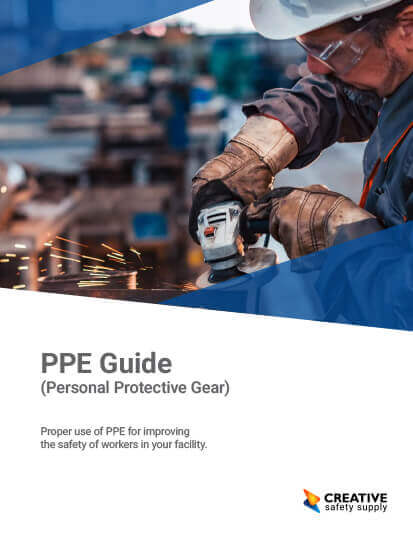
- Welding Helmets: Protect eyes and face from UV/IR radiation, sparks, and flying debris.
- Flame-Resistant (FR) Clothing: Shields the body from sparks, molten metal, and radiant heat.
- Welding Gloves: Protect hands from burns, cuts, and electrical hazards.
- Safety Footwear: High-top leather or steel-toed boots with rubber soles to prevent foot injuries from heavy materials and sparks.
- Respiratory Protection: Respirators or masks to reduce exposure to fumes and airborne contaminants.
- Hearing Protection: Earplugs or earmuffs to protect against noise from welding, grinding, or chipping.
Reliable PPE not only safeguards employees from burns, radiation, fumes, noise, and other welding hazards but also helps maintain compliance with OSHA and ANSI standards.
- Ergonomic Support: Provide adjustable tables, jigs, hoists, or rotator stands to reduce awkward postures and repetitive strain. Avoid welding on the floor whenever possible.
- Training and Awareness: Conduct regular training on welding hazards, safe practices, proper PPE use, and emergency procedures. Reinforce awareness with periodic safety briefings and audits.
- Material Labeling and Hazard Communication: All welding materials, including filler metals and fluxes, should be clearly labeled in accordance with OSHA standards. Labels must indicate hazards associated with:
- Fumes and gases
- Cadmium-containing metals
- Fluorine-containing fluxes
- Ventilation requirements
Proper labeling ensures workers are aware of material hazards and helps enforce safe handling practices, reducing exposure and supporting regulatory compliance.
- Material Handling: Provide mechanical aids or safe techniques to move heavy welding materials, minimizing the risk of crush injuries or strains.
- Emergency Preparedness: Ensure first aid kits, eye wash stations, and spill kits are accessible. Establish clear procedures for burns, chemical exposure, and other accidents.
By implementing these safety measures alongside properly selected and consistently used welding PPE, employers can significantly reduce exposure risks and prevent serious injuries, occupational illnesses, and long-term health complications.
Control Welding Hazards in Your Facility with the Right Tools
Welding can be a high-risk activity, but exposure to hazards can be greatly reduced with comprehensive safety measures and consistent use of PPE. Equipping your team with the right tools, from welding helmets, gloves, and flame-resistant clothing to safety signs, labels, and fire protection equipment, reinforces best practices and protects employees.
Investing in reliable PPE and hazard control supplies not only enhances safety but also ensures compliance with OSHA and industry standards. Take control of welding hazards in your facility by providing the gear your team needs to stay safe and productive.
Similar Articles
- Essential Electrical Safety PPE: Ensuring Worker Protection from Electrical Hazards
- Solar PV Electrical Safety: Standards, Best Practices, & PPE
- Creating an Electrical Safety Program (ESP) for Your Workplace
- Arc Flash [Facts, Safety Requirements & PPE]
- Guide to Short Circuit Safety and Protection in the Workplace
- Fire Safety in the Workplace
- PPE: Personal Protective Equipment [Safety Standards]
- Improving Workplace Electrical Safety
- Addressing Biohazard Safety in the Workplace
- A Guide to Workplace Safety Signs