
- Understanding the National Electrical Code (NEC) — 2026 Edition
- What Is the National Electrical Code?
- What’s Included in the National Electrical Code?
- Is the NEC Federal Law?
- Key Changes in the 2026 NEC
- Structural Reorganization
- Limited-Energy Systems Overhaul
- High-Voltage System Clarity
- Device & Switch Reorganization
- Expanded Arc Flash Hazard Labeling (Section 110.16)
- Working Space & Access Updates
- Surge Protection & GFCI Changes
- Outdoor Service Disconnect Clarity (One- & Two-Family Dwellings)
- Energy Management & Power Control Systems (PCS)
- The Last Word: Why the NEC Matters
Understanding the National Electrical Code (NEC) — 2026 Edition
The National Electrical Code® (NEC®) is the most widely used electrical safety standard in the United States. Every three years, the National Fire Protection Association (NFPA) updates the NEC to address new technology, improve clarity, and enhance safety. The 2026 edition introduces major restructuring, new articles, and expanded requirements, particularly for limited-energy systems and labeling.
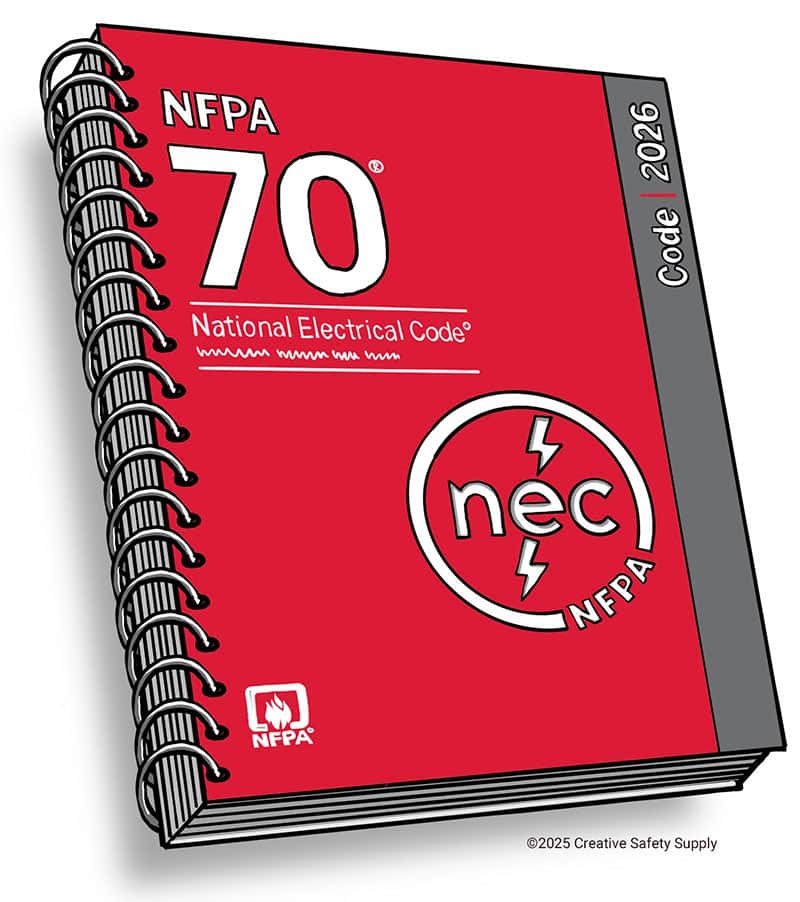
This article provides an overview of the NEC, explains how it is adopted, reviews major 2026 updates, and outlines the Code’s nine-chapter structure.
What Is the National Electrical Code?
The NEC is formally known as ANSI/NFPA 70 because the document must meet the stringent requirements of the American National Standards Institute (ANSI) prior to the standard being accepted. It is the primary safety standard governing the installation of electrical wiring, equipment, and systems in residential, commercial, and industrial settings. Although it is a U.S. standard, it is widely referenced around the world. First published in 1897, the Code is updated every three years to keep pace with technological advancements, industry best practices, emerging hazards, and public input reviewed by NFPA code-making panels. Electricians, engineers, inspectors, and system designers rely on the NEC as the foundational rule set for electrical safety, using it throughout apprenticeship training, licensing exams, design work, and compliance inspections.
What’s Included in the National Electrical Code?
The 2026 NEC retains the established structure of an introduction, nine chapters, annexes, and an index. While keeping this familiar format, the new edition incorporates a reorganized internal layout and clearer terminology to improve usability. Notably, it modernizes several chapter titles to better reflect current installations, especially those involving limited-energy systems and communication requirements. Those chapters are as follows:
Chapter 1: General. The fundamental rules, including the scope, purpose, definitions, and general safety requirements, which serve as the foundation for all electrical installations unless explicitly modified by subsequent chapters.
Chapter 2: Wiring and Protection. The essential design and protection requirements for electrical systems, including the rules for branch circuits, feeders, overcurrent protection, conductor identification, grounding and bonding, and the application of GFCI, AFCI, and surge protection devices.
Chapter 3: Wiring Methods and Materials. The physical installation of electrical wiring systems by defining the acceptable methods and materials, including the proper use and installation of conduits, raceways, various cable types, busways, cable trays, and requirements for conductor insulation and ampacity.
Chapter 4: Equipment for General Use. The installation and use of common electrical equipment found in typical settings, including switches, receptacles, luminaires, appliances, HVAC equipment, generators, transfer switches, panelboards, and switchboards.
Chapter 5: Specific Occupancies and Locations. This chapter modifies or supplements the general requirements found elsewhere in the Code to ensure electrical safety in specific environments that present unique hazards or operational conditions, such as hazardous (classified) locations, healthcare facilities, agricultural buildings, and marinas.
Chapter 6: Specific Equipment. The installation requirements for specialized, often high-technology equipment that evolves frequently, including industrial machinery, elevators, escalators, solar photovoltaic (PV) systems, energy storage systems, fuel cells, and electric vehicle (EV) charging equipment.
Chapter 7: Specific Conditions and Systems. The installation requirements for various specialized systems operating under specific conditions, including emergency and standby power, fire alarms, information technology equipment, fault-managed power, and the newly consolidated rules for limited-energy wiring systems.
Chapter 8: Communications Systems (Outside and Entering Buildings). The installation requirements for communication systems, including telephone, data, internet, fiber-optic, antenna, and CATV infrastructure, specifically addressing circuits and equipment that originate outside and enter the building.
Chapter 9: Tables. The essential technical tables required for accurate code application, including values for conduit and raceway sizing, conductor fill calculations, ampacity correction factors, and various cable geometry values.
Is the NEC Federal Law?
The NEC is not federal law—it is a model code that states, counties, and cities choose to adopt and enforce in their own way. Many jurisdictions adopt the Code with amendments to address local conditions, which is why different areas may enforce different NEC editions and follow varying update cycles. Local Authorities Having Jurisdiction (AHJs) are responsible for interpreting and enforcing the requirements. Because adoption varies so widely, professionals should consult resources such as the NEC Adoption Map or their state’s Department of Labor and Industry to verify which edition is currently in effect in their area.
Key Changes in the 2026 NEC
The 2026 edition includes some of the most substantial structural updates in recent decades. Key updates include:
Structural Reorganization
The internal structure of the NEC has been updated to boost clarity and consistency. This includes simplifying and reorganizing chapter titles, so they better reflect the actual design and installation sequence of electrical systems. Additionally, Informative Annex L provides a preview of even more significant reformatting that is currently planned for the 2029 edition.
Limited-Energy Systems Overhaul
This area represents one of the most substantial revisions in the 2026 NEC, reflecting the growth of low-voltage technology like Power over Ethernet (PoE) and digital power distribution. The Code achieves this overhaul by largely integrating communication rules from the independent Chapter 8 into Chapter 7. Furthermore, Article 100 now includes a new, universal definition for limited-energy cable, which applies consistently across all low-voltage applications, including Class 2, Class 3, PoE, optical fiber, and communication cables. To govern these systems clearly, a new series of articles (720–750) has been created within Chapter 7, detailing rules for general wiring (720), power sources (721), cables (722), raceways and trays (723), overvoltage protection (742), and grounding and bonding (750).
High-Voltage System Clarity
To improve both safety and usability for medium- and high-voltage installations, the 2026 NEC introduces new articles that formally and distinctly separate the requirements for systems operating above 1,000 V AC and systems above 1,500 V DC.
Device & Switch Reorganization
The switching equipment requirements have been reorganized to provide greater clarity: Article 406 now exclusively covers device-type switches (such as wall switches, dimmers, and smart switches), while Article 404 is dedicated to larger switching devices (including disconnects, pull-outs, and circuit breakers used as switches).
Expanded Arc Flash Hazard Labeling (Section 110.16)
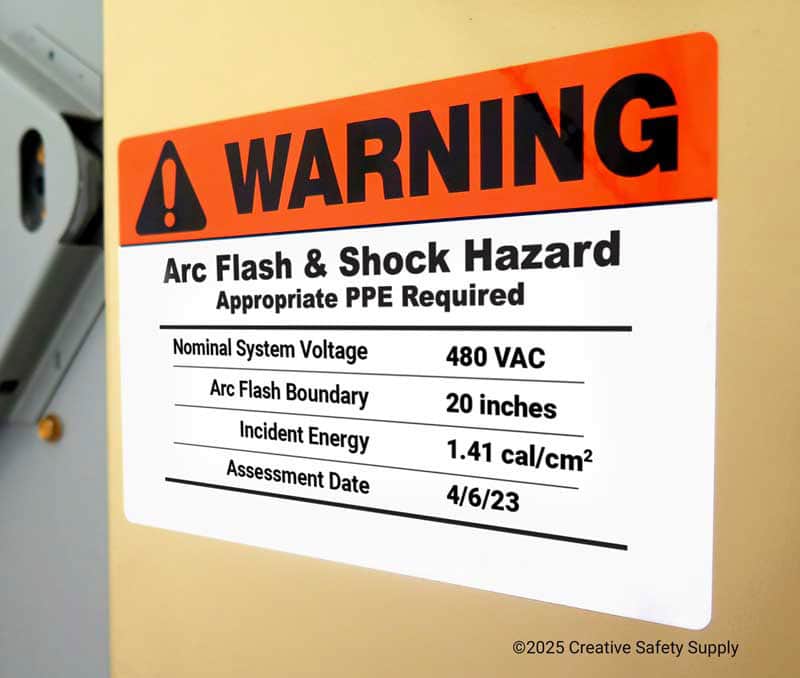
The 2026 NEC significantly expands safety labeling requirements, compelling more types of non-dwelling distribution equipment to carry an arc flash hazard warning. This revision mandates that the permanent label must clearly include the nominal system voltage, either the incident energy or the required PPE category, the date of the arc flash assessment, and clear equipment identification for field personnel, ultimately increasing transparency and worker protection.
Working Space & Access Updates
The new rules mandate that required working clearances must now specifically consider any equipment doors opening beyond 90°, which ensures safe and unobstructed access for personnel during servicing, maintenance, or emergency situations.
Surge Protection & GFCI Changes
Surge protection requirements are now expanded to cover certain sleeping quarters, such as dormitories and fire stations. For dwelling units, all outdoor HVAC equipment is now required to have Ground-Fault Circuit-Interrupter (GFCI) protection. Furthermore, the NEC recommends the use of high-frequency rated GFCIs for circuits supplying inverter-driven HVAC systems to effectively prevent common nuisance tripping.
Outdoor Service Disconnect Clarity (One- & Two-Family Dwellings)
Section 230.70 has been updated to require the service disconnect for one- and two-family dwellings to be readily accessible and located outdoors, either directly on the dwelling or within line of sight. This critical change is intended to significantly improve access for emergency responders.
Energy Management & Power Control Systems (PCS)
PCS are now officially recognized and defined within the Code, reflecting their increasing use in buildings that incorporate energy storage, solar, or EV charging. While PCS can be utilized in load calculations, their control setting is restricted to a maximum of 80% of the Overcurrent Protection Device (OCPD) rating.
The Last Word: Why the NEC Matters
Ultimately, the NEC is the indispensable foundation of electrical safety in the United States. Its importance lies in providing a comprehensive, uniform national standard that drastically reduces fire and electric shock hazards. By clearly establishing requirements for consistency and easy inspection, the NEC ensures the protection of both workers and building occupants, supports the essential interoperability of electrical equipment across the industry, and explicitly defines the critical safety responsibilities for everyone involved—from designers and manufacturers to installers and inspectors.
NFPA 70®, National Electrical Code®, and NEC® are registered trademarks of the National Fire Protection Association (NFPA). This article does not represent the official position of the NFPA. All other trademarks are the property of their respective owners.
Similar Articles
- NFPA 99: Understanding the Health Care Facilities Code
- Electrical Wire Colors
- Electrical Wiring (Wire Color Codes)
- Improving Workplace Electrical Safety
- 10 Essential Steps for Electrical Safety
- Labeling Electrical Conduits
- Arc Flash and Electrical Safety
- Neutral Wire Color
- Labeling Practices for Power Generation Facilities
- Arc Flash [Facts, Safety Requirements & PPE]