

NFPA, OSHA, IFC, and ISO are common abbreviations frequently heard in work environments, such as manufacturing facilities, warehouses, or construction sites. Despite the differences in what they govern and how they are enforced, each of these leading authorities is critical to ensuring safety, occupational health, fire safety, and environmental compliance.
Here’s a breakdown of each:
NFPA: The National Fire Protection Association is a U.S– based non-profit organization that offers codes and consensus standards for eliminating death, injury, property, and economic losses caused by fires. The organization has published over 300 codes and standards, along with the National Electrical Code (NEC) or NFPA 70, to protect workers against electrical hazards.
OSHA: The Occupational Safety and Health Administration (OSHA) is a federal regulatory agency that safeguards the rights of workers by imposing standards that guarantee safe and healthful working conditions without risk of potential hazards. In essence , OSHA dictates what employers must do to protect workers, whereas NFPA offers guidelines on how to create a safe working environment. Regulations published by OSHA are deemed mandatory.
IFC: The International Fire Code (IFC) is a set of minimum guidelines for creating fire prevention and protection systems. Published by the International Code Council (ICC), the code also references NFPA guidelines on how to implement its provided guidelines. For instance, if a sprinkler is required, the IFC would typically recommend it be installed in accordance with NFPA.
ISO: Abbreviation for International Organization for Standardization, which is an independent, non-profit organization that publishes international standards for various fields. From healthcare to technology and manufacturing to food safety, the organization ensures products in different countries are efficient, reliable, and safe to facilitate international trade.
Here’s a look at NFPA, OSHA, IFC, and ISO at a glance:
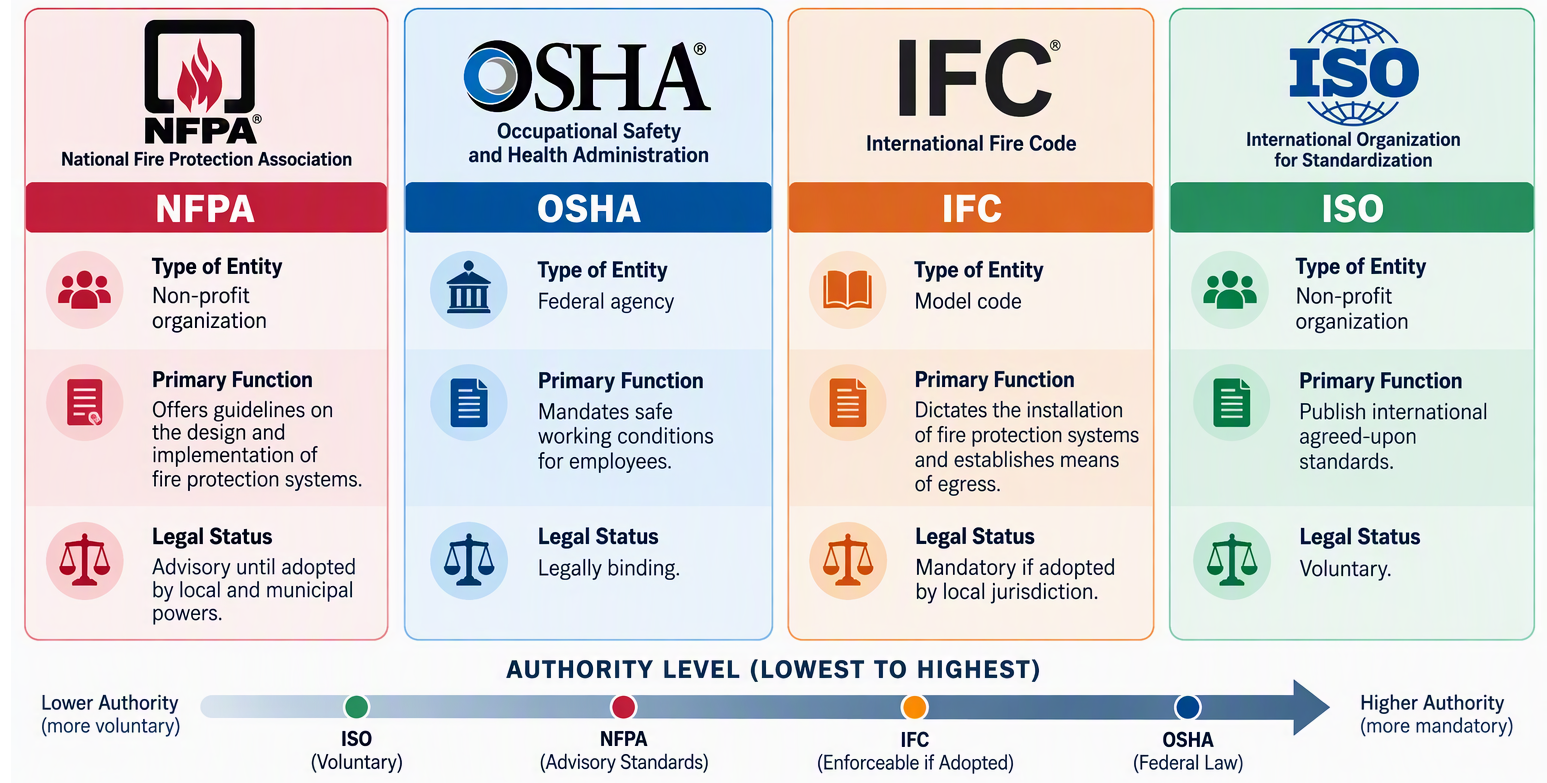
To manage workplace safety effectively, managers and safety professionals should understand that OSHA provides the mandatory U.S. laws, NFPA and IFC provide the highly detailed technical engineering codes, and ISO provides the voluntary global framework to manage it all.

