
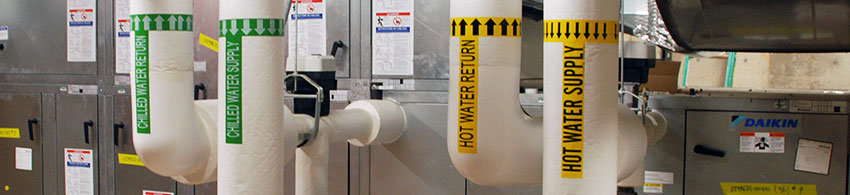
Do you know when it's time to replace your pipe labels? While there isn't a universal expiration date for pipe labels, there are key indicators that can help determine when a replacement is necessary. In this article, we will explore the various situations that require pipe markers and labels replacement.
Specific Conditions That Require Label Replacement
Regardless of the quality of your pipe labels, they can deteriorate over time or become ineffective for various reasons. Here are several critical situations that require you to change or upgrade pipe markings:
- Labels are physically damaged: If a pipe label is peeling, falling off, torn, or otherwise unstable, it should be replaced immediately to prevent safety risks, costly mistakes, and information loss.
- When label cleaning doesn’t help: If a label is heavily soiled with grease, chemicals, or paint overspray to the point where standard label cleaning methods fail to restore clarity, it must be replaced.
- Information is illegible: Faded or unclear lettering makes labels useless and is a safety risk, so they must be replaced.
- Piping systems are modified: Replace labels if there are any changes to the pipe's contents or flow direction.
- Non-Compliance: If the labels do not meet current safety standards and regulations, such as the latest edition of the ANSI/ASME A13.1, they should be updated to ensure compliance and avoid potential citations.
- Poor Visibility: If a label is positioned in a way that it cannot be easily seen from a typical line of sight or if the text size is too small for the viewing distance, it needs to be replaced.
How to Ensure Proper Pipe Label Replacement
Practices like performing regular inspections of all pipe markings can help ensure that all the labels in your facility are legible and clearly visible. Any labels that do not meet these criteria should be replaced immediately to ensure workplace safety. When replacing your pipe labels, make sure to follow standardized pipe marking guidelines, like ANSI/ASME A13.1, use durable supplies, and ensure correct placement and sizing. This will help ensure that the labels remain effective for a long time and communicate the necessary information clearly.

