
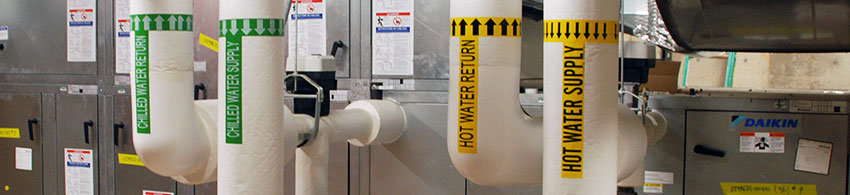
Ensuring the clarity and legibility of your pipe labels is essential for workplace safety, compliance, and efficient facility operation. Even labels that are correctly installed, sized, and positioned can lose their clarity over time due to dust, grime, physical contact, or exposure to contaminants. When pipe markings become hard to read, workers may misidentify pipe contents, potentially leading to safety hazards or operational delays.
While replacing dirty pipe labels is an option, it's not always the most cost-effective or practical solution if the labels are otherwise in good condition. With proper cleaning, many pipe labels can be restored, extending their lifespan and preserving legibility. Let’s explore when to clean pipe labels, how to do it effectively, and the best methods for handling older or stubborn residues.
Procedures for Cleaning Your Pipe Labels
The cleaning process for pipe markers is simple but must be done with care to preserve both readability and the integrity of label material. Below are the essential procedures and why each one matters:
Inspect the Label Condition: Check for peeling edges, fading ink, or cracking. This will help you determine whether cleaning will be effective or whether replacement is needed.
Wipe Away Loose Dust and Debris: Use a dry microfiber cloth to remove surface particles. This will help prevent abrasive debris from scratching or tearing the label during deeper cleaning.
Use Mild Solutions or Standard Products: Apply standard label cleaning products or mild cleaning solutions based on the type of buildup, and wipe gently with a non-abrasive cloth to maintain pipe marking clarity. Avoid harsh chemicals as they may damage adhesives, fade print, or weaken the label material.
Rinse and Dry Thoroughly: Remove any cleaner residue and allow the label to dry fully, as leftover moisture can degrade adhesives and cause premature peeling.
Avoid Abrasive Tools or Strong Solvents: Skip steel wool, rough pads, or other harsh products. These can scratch, smear, or completely remove the label surface.
Establish an Inspection and Cleaning Schedule: Because pipe labels are often overhead or hidden, they can easily become “out of sight, out of mind.” A set inspection and cleaning routine will help ensure pipe markings stay legible before dirt buildup becomes a problem.
Handling Old or Stubborn Pipe Labels
If you are dealing with aged, tough-to-clean, or partially deteriorated pipe labels:
- Use warm water to loosen dirt before applying gentle cleaners.
- Apply for sticky buildup or residue.
- For pipe markings beyond rescue, use a plastic scraper and a label remover spray designed for industrial surfaces to lift them cleanly without damaging the pipe. After removal, clean the area before applying a new label to ensure proper adhesion.
Keeping pipe labels clean and readable is key to safety and compliance. Regular cleaning with proper products and a consistent schedule extends label life and prevents hazards. For more on overlooked pipe marking practices, see our guide on Pipe Labeling Mistakes.
Similar Questions
- What are different types of pipe labels?
- How do I calculate how many pipe labels I will need?
- What are different materials you can use for pipe labels?
- Can I create custom pipe labels and still be compliant?
- What text should I use on a pipe label?
- Where should I place pipe labels?
- What Information Can I Include on a Pipe Label?
- What is pipe labeling/pipe marking?
- What are the different standards of pipe marking?

