
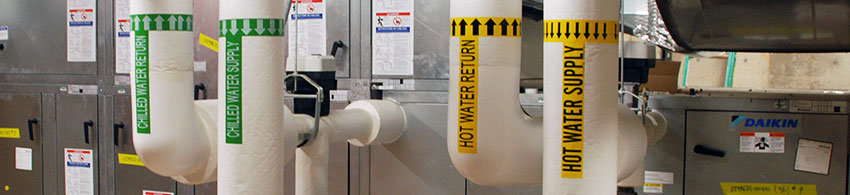
Steam is a highly efficient energy carrier used in various industrial and commercial applications for heat transfer, mechanical work, and sterilization. While a useful resource, it is hazardous when not handled properly, requiring proper identification for safe handling.
One effective method for identifying steam pipelines is through clear and consistent pipe marking. However, many people might be unsure about the appropriate color for a steam pipe label. The reality is that there isn't a single, universally accepted label color for steam pipes used worldwide. The color depends entirely on the regional or industry-specific pipe marking standards that a facility adheres to.
In this blog, we will look at the most common color codes for steam pipe labels used across various industries and regions.
Common Color Combinations for Steam Pipe Marking Labels
As mentioned, the color codes for steam pipe labels vary significantly depending on the region and the prevalent standard being enforced. The key to safe and compliant identification lies in the specific color combination used for the label text against that background color. Here are the most common pipe marking standards that provide the background and text color combinations used for steam pipe labels:
ANSI/ASME A13.1 Pipe Marking Color Code for Steam Pipes
The recent 2023 edition of the ANSI/ASME A13.1 standard designates a gray label color with black text for pipes containing steam. Before the 2023 revision, steam pipes often fell under user-defined color categories or general "low hazard" classifications, typically using white on green or black on yellow labels, depending on interpretation and facility-specific policies.
BS 1710: The British Pipe Marking Color Codes for Steam Pipes
The BS 1710 pipe marking standards use a system of a base color supplemented by safety or code colours for more detailed identification. For steam, the base color is silver-grey that covers the majority of the pipe label, with a supplementary color positioned centrally between two bands of this color. Moreover, the label text must have a high contrast color, such as black or white, to ensure clear visibility against the background.
ISO 20560 Pipe Marking Color Codes for Steam Pipes
The ISO 20560-1 standard uses a two-tier color system and specifies that pipe marking for a hazardous substance like steam should use a combination of its basic identification color, grey, along with a contrasting safety band of yellow color.
While the ASME A13.1, BS 1710, and ISO 20560-1 standards cover the vast majority of industrial applications, there are other standards, such as the European pipe marking standards. These different standards show that pipeline identification is highly regulated to meet specific regional or industry-specific safety needs. Adhering strictly to the relevant industry standard is essential for safety compliance, ensuring that steam pipes are safely identifiable by all personnel.
Similar Questions
- How do you label water pipes?
- What are the ANSI standards for pipe color codes?
- what does a yellow pipe label mean?
- What do user-defined color combos mean for pipe marking?
- What is pipe labeling/pipe marking?
- What does a blue pipe label mean?
- Is there a color code for pipelines?
- What are ANSI’s Pipe Labeling Standards?
- How do you label pipes?

