

Signs related to fire safety use standardized colors to communicate safety information at a glance. The main colors are red, green, yellow/amber, blue, and white, each representing a specific safety message such as fire protection equipment, escape routes, warnings, mandatory actions, or special hazards. These color codes are defined in widely used safety frameworks such as ISO 7010 and ANSI Z535, ensuring consistency across facilities.
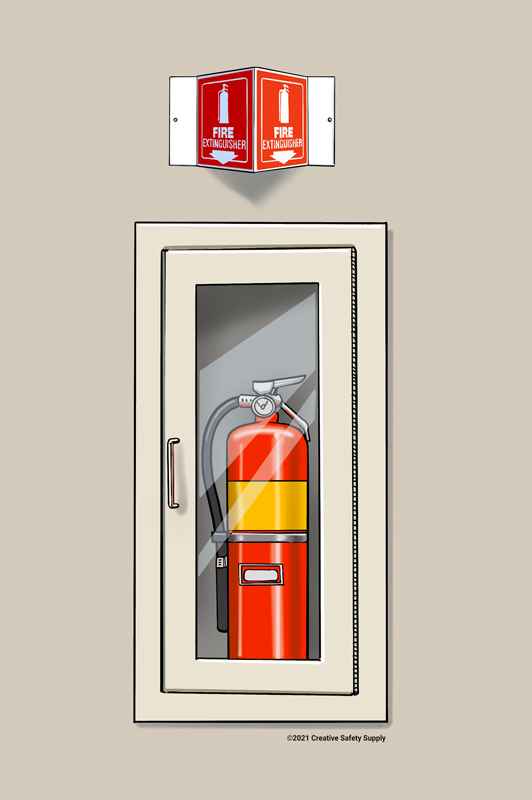
Red (Fire Protection & Prohibition): Red is used to identify fire-fighting equipment and apparatus such as fire extinguishers, fire alarms, fire hose reels, and fire blankets. It is also used for prohibition signs, such as “No Smoking” or “No Open Flames,” which typically feature a red circle with a diagonal slash. Red signals immediate fire-related action or restriction.
Green (Safe Condition and Escape Routes): Green indicates safe conditions and evacuation guidance. It is used for emergency exit routes, fire exits, escape pathways, and assembly points. These signs are designed to guide people safely out of a building during an emergency.
Yellow/Amber (Warning): Yellow or amber is used for warning signs that indicate potential fire hazards or dangerous conditions. Examples include highly flammable materials or areas with fire risk. These signs are typically triangular with black symbols and borders, emphasizing caution.
Blue (Mandatory Action): Blue is used for mandatory safety instructions, actions that must be followed to maintain fire safety. A common example is “Fire Door Keep Shut.” These signs are circular with white symbols or text on a blue background and indicate required behavior rather than danger.
White (Special Information): In the NFPA 704 “Fire Diamond” system, the white quadrant is reserved for special hazards like water reactivity (W) or oxidizers (OX). This is important because it warns first responders that standard firefighting methods, like using water, may be unsafe and could cause dangerous reactions, requiring special handling or extinguishing agents.
These standardized colors create a universal system that allows fire safety signs to be quickly recognized and correctly understood in emergencies. When the appropriate colors are consistently used for hazards, equipment, and evacuation routes, they improve response time and reduce confusion, helping ensure safer behavior in workplaces. Even without reading text, people can immediately interpret the meaning of a sign, making fire safety signage an essential part of effective risk prevention.
Similar Questions
- What do different colors of safety signs mean?
- What are the 9 safety colors?
- What does it mean to have OSHA/ANSI compliant signs?
- What are ANSI colors?
- What are types of signs in the workplace?
- What are the NFPA standards for fire extinguishers and fire sprinklers?
- What are examples of fire safety signs?
- Why are safety signs important?
- What are the Safety Signs that Every Workplace Should Display?
Additional Resources

